The tensions within the Horn of Africa continue to become more acute on a daily, if not hourly basis with few eyes paying attention.
Over the weekend of January18th a new conflict zone emerged. It was not in Somalia nor was it in Ethiopia. Sadly, this is not even a new conflict. This is the reemergence of a dark era in the country’s history.
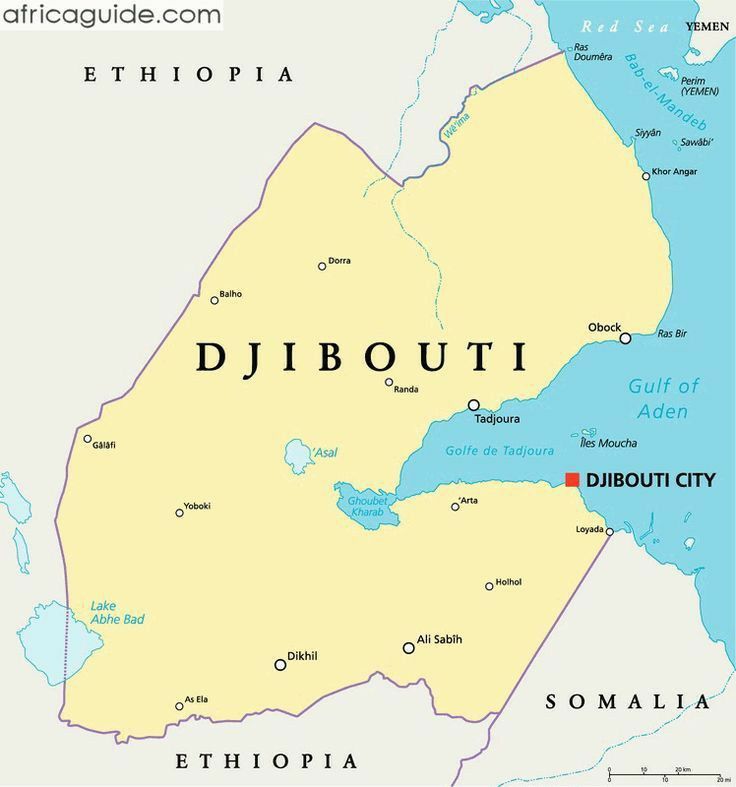
Fighters from FRUD (Front for the Restoration of Unity and Democracy) a group comprised of fighters mostly from the Afar tribe launched a series of attacks over the weekend in the country achieving success in several areas of the country including capturing military installations in the districts of Tadjura,Obock and Dikhil. In response the government unleashed their supporters within the capital resulting in fighting between the Afar and Issa communities in Djibouti City.
The group has stated that the goal is to replace the “entrenched dictatorship” of President Ismail Omar Gulleh who has been in power for three decades with a genuine multi-party democracy where all voices are heard. The territory of the Afar tribe in Djibouti comprises an estimated 80% of the total land area of the whole country. Since gaining independence from France in 1977 the Afar have been marginalized in domestic politics.
As with most issues in Africa there are other issues below the horizon than what is generally making the international newscasts.
Currently Djibouti is one of strategic countries in Africa. It sits on the Red Sea north of Bab-El-Mandeb strait. As with Egypt the country has suffered financial hardship resulting from the activities of the Houthis when they were attacking shipping that was suspected of being Israeli in nature or heading to the country.
As a result of these activities shipping to Djibouti became dangerous. Some maritime insurance companies raised their rates for container ships en route to the country. This has put some stress on the country.
The country is also important in the complex security situation in the region. It hosts military bases for several countries including the former colonial power France, China, Japan and the United States. As tensions continue to fester in the region, the importance of Djibouti will draw attention to it.
A decision by President Gulleh which has not drawn much international interest but still could impact regional tensions. President Gulleh has seen fit to support the position of the Somali Federal Government in its effort to remain as one entity.
Even though there has been no reporting of a linkage, the timing of the new offensive after the recognition of Somaliland as an independent state by Israel a few weeks ago should have people asking about a possible motive considering the support for Mogadishu coming from Djibouti.